

 KAINOX
 KaiFridge
 KaiCook
 Khu sơ chế
 Khu lưu trữ
 Khu Bếp Nóng
 Khu Bếp bánh
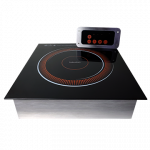 Khu Buffet
 Khu Pha Chế
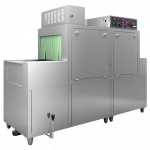 Khu Rửa
Unlocking Your Mind’s Second Dimension
Unlocking Your Mind’s Second Dimension
We often treat our cognitive abilities as a single, flat road—either we’re alert and sharp, or we’re drowsy and distracted. But our inner world is far more layered than that. Beneath the surface of everyday awareness lies something deeper, often called the second dimension of thought. It’s not a mystical fog, but a different state of mental activity where intuition, pattern recognition, and creative synthesis work beneath the noise of our constant chatter. Think of it as a quiet workshop running in the basement of your brain, ready to build solutions while you focus on other things.
This concept isn’t just abstract philosophy. It’s a practical doorway to enhanced learning, problem-solving, and emotional balance. The idea has gained traction in fields ranging from neuroscience to high-performance coaching. One platform that explores this territory with a playful, rewarding twist is mental2slot.net, where the mechanics of quick decision-making and stochastic thinking offer real-time feedback loops—essentially training your mind to flick between its two dimensions on the fly.
So what exactly is this second dimension? Imagine your conscious mind as a spotlight—it can only illuminate a small, clear circle at a time. The second dimension is the surrounding darkness where everything else exists: memories, associations, subtle cues you didn’t consciously register, and the raw material for hunches. When you step back from active reasoning and enter a state of relaxed alertness, you allow this deeper layer to surface. That’s when you suddenly remember a forgotten name or have a creative breakthrough in the shower.
Entering the Quiet Workshop
Accessing this deeper layer isn’t about forcing yourself to “think harder.” It’s about letting go of the intense grip your conscious mind has on the steering wheel. One powerful method is to engage in tasks that require both focus and flow, like solving timed puzzles, playing strategy games, or even rhythm-based activities. These tasks demand your attention, but not your relentless, critical analysis. They create a groove where your conscious mind grooves along while your unconscious workshop keeps the engine running.
This is where deliberate practice meets accidental discovery. Instead of grinding through problems with brute logic, you learn to trust the moments when an answer just feels right. Over time, this builds a kind of mental agility—the ability to flick between analytical and holistic thinking without friction. Athletes call it being “in the zone.” Musicians know it as losing themselves in the performance. For the rest of us, it’s a skill that can be cultivated, not just stumbled upon.
Key Traits of the Second Dimension
- Integrated Processing: It pulls from multiple streams of data at once, not just one line of reasoning.
- Reduced Self-Censorship: The inner critic gets quieter, allowing novel connections to form.
- Heightened Pattern Sensitivity: You notice recurrences and anomalies that the logical mind might filter out.
- Emotional Resonance: Feelings become data, offering feedback on whether a thought or decision “fits.”
When these traits align, you are no longer just thinking about a problem; you are thinking with your entire cognitive ecosystem. A spreadsheet might show one thing, but a persistent sense of unease from the second dimension might be warning you of a deeper inconsistency. Learning to balance these two signals is a lifetime skill.
Bridging Dimensions with Practical Tools
To truly unlock your mind’s second dimension, you need a bridge. That bridge often comes in the form of structured exercises that combine speed and uncertainty. Slow, deliberate reasoning uses only your spotlight. Fast, probabilistic decisions force you to rely on the quieter workshop. Think of it as training both your sprinter and your scout.
Here is a simple comparison of how each dimension handles different tasks:
| Aspect | First Dimension (Spotlight) | Second Dimension (Workshop) |
|---|---|---|
| Decision Style | Sequential, step-by-step logic | Gestalt, parallel pattern recognition |
| Speed | Slower, deliberate | Fast, often intuitive |
| Strengths | Precision, proof, detail | Creativity, novelty, holistic insight |
| Weaknesses | Can get stuck in analysis paralysis | Can mislead without reality checks |
| Best Used For | Planning, math, debugging | Brainstorming, risk assessment, improvisation |
By toggling between these modes in a controlled environment, you start to build a flexible mental muscle. Over time, the gap between them narrows, and you can move from one to the other almost seamlessly.
FAQ — Common Questions About the Second Dimension
1. Is the second dimension just intuition?
Not exactly. Intuition is one output of the second dimension. The dimension itself is the broader perceptual mode that includes memories, subtle cues, and non-linear associations.
2. Can I train my mind to access it on demand?
Yes, but it requires practice. Activities that combine time pressure with pattern recognition are effective. The key is to reduce the interference of your internal critic.
3. Is it related to the subconscious?
It overlaps with the subconscious, but it’s more dynamic. The second dimension is an active processing mode, not just a storage vault.
4. How does this affect daily decision-making?
It enriches it. You become more aware of the “felt sense” behind facts, which can help you avoid purely rote choices and discover more creative options.
5. Can it be used for emotional regulation?
Absolutely. When you tune into the second dimension, you often catch the emotional undercurrents before they escalate. This allows for more grounded responses.
6. Are there any risks to relying on it too much?
Balance is crucial. Over-relying on the second dimension without grounding your insights in concrete reasoning can lead to bias or wishful thinking. The goal is integration, not domination.
7. What is the single best way to start exploring it?
Set aside ten minutes a day for a low-stakes, fast-paced task that requires you to make quick judgments. Watch what arises before your conscious mind takes over.
The mind’s second dimension is not a hidden code to crack—it is a companion to your conscious self. When you treat it with respect and curiosity, it reveals pathways you never knew existed.
In a world that prizes speed and certainty, learning to trust the quieter, slower, more integrated part of your mind may feel counterintuitive. Yet that is exactly where the richest insights often live. By deliberately stepping into that workshop, you unlock not just smarter thinking, but a more expansive way of being. The second dimension is waiting. All you have to do is dim the spotlight and listen.